


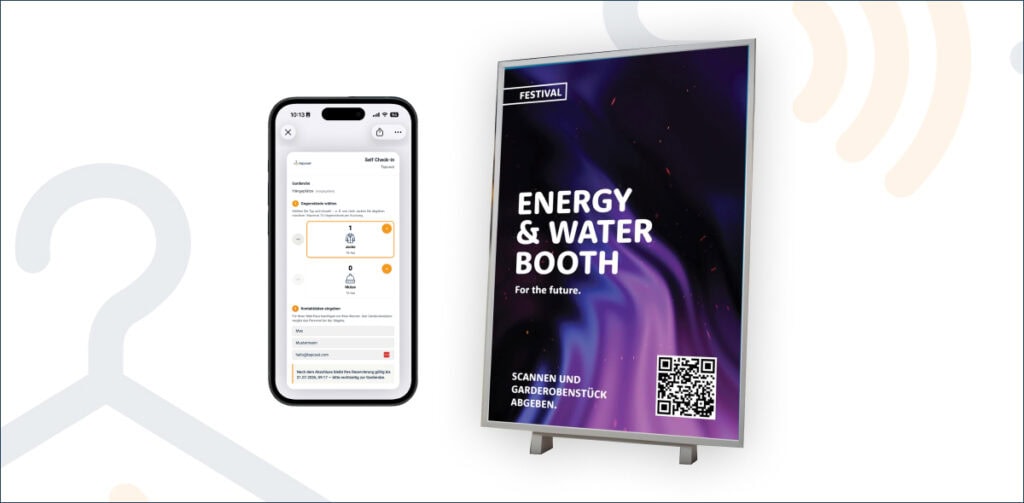
At event cloakrooms, guests abandon lines after 10 to 15 minutes on average (Wavetec, 2024). Self Check-in cuts exactly this wait: instead of generating a new QR code tag for every guest, an existing code – from event ticket to wallet pass – becomes the cloakroom tag. One process step fewer, app-free, clearly assigned.
The new Self Check-in feature is now available in Tapcoat. It links the item directly to a code your guests already carry – without creating an extra tag at the counter. Read on to learn how it works, which events it pays off for, and what it saves you.
Why waiting at the cloakroom is expensive
At many events, the cloakroom is the bottleneck – and twice over: on arrival and on departure. That hits mood, reviews, and revenue directly.
- At event cloakrooms, guests abandon lines after 10 to 15 minutes on average; inefficient processes lower event satisfaction by up to 30% (Wavetec, 2024).
- Around 80% of consumers avoid a business as soon as they see or expect a line (Waitwhile Consumer Survey, 2024).
- According to surveys, nearly one in three to four guests at event venues leaves a long entry line before it is even their turn (QueueAway, 2026).
Self Check-in addresses exactly these three points: fewer steps, shorter lines, clear assignment.
No other cloakroom system can do this: two paths, one process
Most digital cloakroom solutions solve only half the problem: they replace the paper tag with a QR code – but still generate a new one for every guest. So the “issue tag” step remains; it just goes digital. Self Check-in goes one step further and eliminates this step entirely when the guest already has a valid code. That is the difference between a digitized cloakroom and a truly faster one – and exactly what gives Tapcoat a clear edge at the counter compared with other systems.
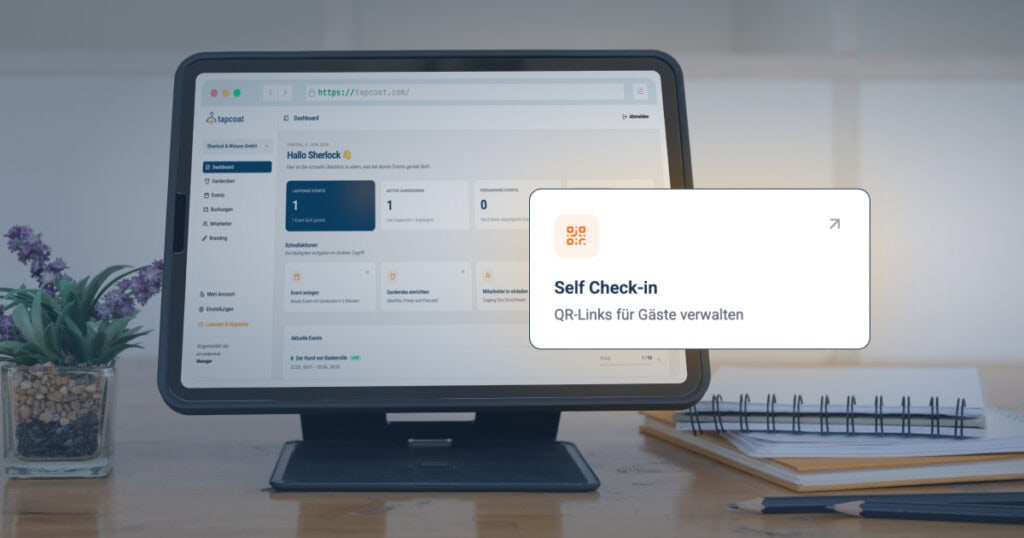
External or internal QR codes: the key difference
Self Check-in distinguishes between two fundamentally different types of code. This distinction is central to understanding the feature:
- External QR codes are codes your guests already have before they reach the cloakroom – for example on their event ticket, trade show ticket, entry confirmation, guest list code, or wallet ticket. Tapcoat doesn’t create anything new here; it scans the existing code and links it to the item. This works whenever your guests come through a ticketing or admission system anyway.
- Internal QR codes are generated directly by Tapcoat and exist solely for the cloakroom – they have nothing to do with the event ticket. This is the right choice when there is no external code or the ticketing system can’t be integrated, for example for guests without a digital ticket or for walk-in admissions.
You can also use both paths in parallel: some guests check in with an external ticket code, the rest with an internally generated Tapcoat code – depending on what is available at the entrance. In both cases, only one thing matters: the code must be unique.
What makes Self Check-in different
Instead of generating a fresh QR code tag for every person, an existing code is scanned and linked to the item. At pickup, your team scans the same code – done. The guest needs no app and no additional ticket.
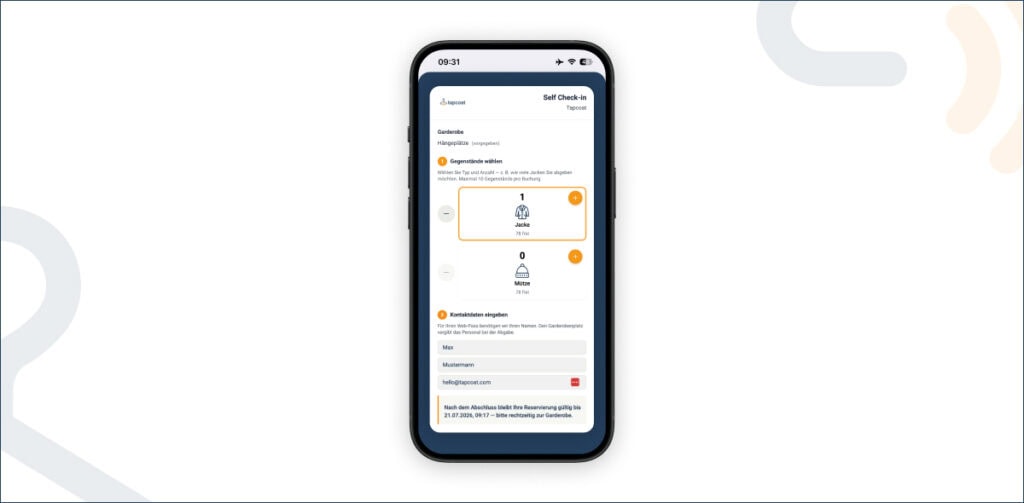
What Self Check-in does for your operation
- Faster check-in: One process step fewer per guest – taking pressure off the counter right at peak times.
- Clear assignment: Every item is digitally linked to a unique code. Fewer mix-ups, less searching.
- Less staff time: Shorter lines with the same team.
- App-free for guests: An existing or generated code is all it takes – no installation, no hurdle.
- Flexible integration: Trade show, theater, club, arena, or corporate event – the process adapts.
The events where Self Check-in pays off most
Anywhere guests already arrive with tickets, entry codes, or digital identifiers:
- Trade shows and conferences
- Concerts and festivals
- Theaters and cultural venues
- Stadiums and arenas
- Corporate events and guest list events
- Clubs and nightlife events
How to set up Self Check-in
In Tapcoat, you decide whether internal QR codes are generated or external codes are accepted – tickets with barcodes work too. You’ll find the full step-by-step guide in the support article “Setting up Self Check-in”. The feature page shows all the details. For a setup with your ticketing system, we’re happy to plan the workflow together with you.
Common questions about Self Check-in
What exactly is Self Check-in?
Self Check-in means that an existing external QR code or a code generated internally by Tapcoat is used for identification in the cloakroom process. The code links guest and item unambiguously.
What is the difference between external and internal QR codes?
Guests already bring external QR codes with them – for example on their event ticket or wallet pass. Internal QR codes are generated by Tapcoat and are valid for the cloakroom only. Use external codes when a ticketing system is in place; use internal ones when there is no external code.
Do guests need to install an app?
No. The process works without an app. Your guests only need their existing QR code or the code generated for them.
How much time does Self Check-in save at the counter?
Self Check-in removes the “create a new tag” step entirely. Since guests at event cloakrooms abandon lines after 10 to 15 minutes on average (Wavetec, 2024), every step you save at peak times pays off directly in throughput and satisfaction.
Is Self Check-in suitable for large crowds?
Yes. The process shows its strengths especially at busy times, because identification is digital and unambiguous and steps at the counter are eliminated.
Ready for a faster cloakroom?
Try Self Check-in with existing ticket codes or internal QR codes and take the bottleneck out of your cloakroom. Email us at hello@tapcoat.com or read the setup guide.


